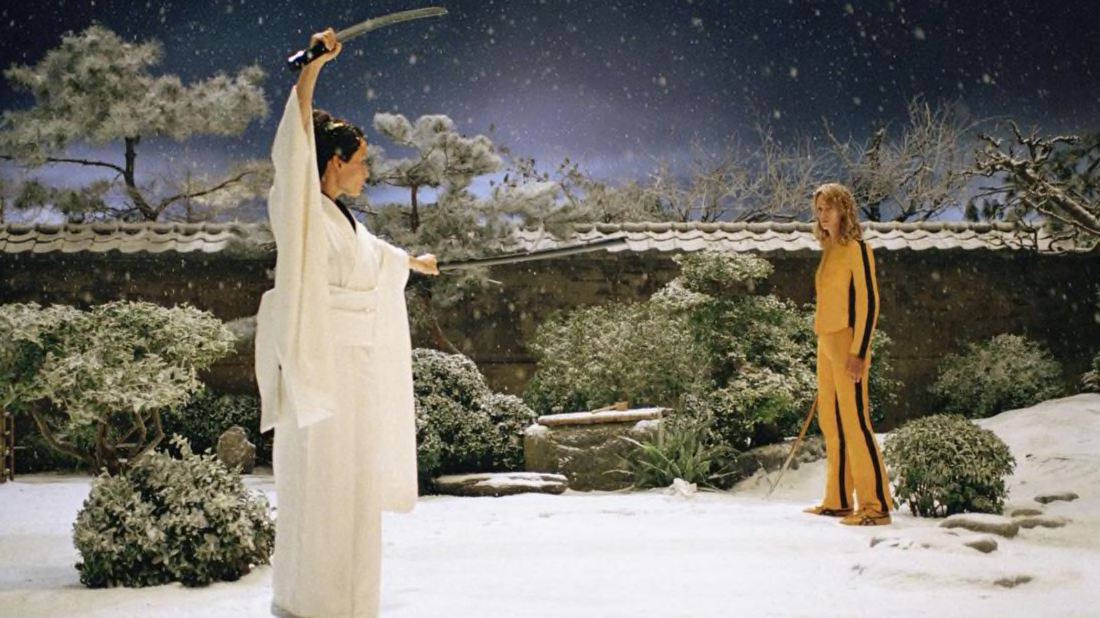
(Andrew Cooper, Miramax Films)
By Jake Rader
“Kill Bill Vol 1” is Quentin Tarrantino’s effortless dive into the Kung Fu movie genre. Tarrantino tells the tell of The Bride (Uma Thurman). The Bride embarks on a blood thirsty killing spree centered around revenge against the Deadly Viper Assassination squad.
The Bride chooses to leave the Deadly Vipers and start a new life in El Paso Texas as she is pregnant and does not want to live the life of a bounty hunter. This angers Bill (David Carradine) who is the leader of the Squad, and the father of The Bride’s baby.
Bill orders his associates Venita Green (Vivicia A Fox) O-ren Ishii (Lucy Liu), Elle Driver (Darryl Hannah), and Bud (Michael Madsen) to kill The Bride, and everyone at her wedding rehearsal. The bride miraculously survives and wakes up from a coma to begin her revenge tour.
Tarrantino puts on a masterclass in this film by telling the audience a whole lot, while having the characters say so little. A prime example of this would be whenever something ticks in The Bride’s head that causes her anger.
When this happens, the camera zooms in directly on her face, and chaotic music plays. A lot of these moments tend to have flashbacks associated with the them from events caused by trauma. The serious ness of the expressions on people’s faces do all the talking in this movie of little dialogue.
Take the look on The Bride’s face after she kills Venita Green. Green’s child (Amberosa Kelly) is standing in the room, overlooking her dead mother.
The Bride glances at the child with a slight look of compassion, but still a relatively cold look and says, “If you still feel raw about it, I’ll be waiting.”
This was a brilliant idea by Tarrantino, as the scene leaves the door open for a third film that would follow this plotline. It would be an unbelievable third installment to the legendary franchise to have Venita’s daughter attempt to hunt down and kill the Bride.
Another sign of compassion is shown in how The Bride and Venita Green react when Venita’s daughter walks through the front door. They go from a grewsome knife fight, to stopping dead in their tracks, so Venita’s daughter does not see their actions.
What I took away from this is that these women want more for their kids than the life of killing they lived. Similar to how The Bride ran away to El Paso in order to start a new life with her child, Venetia has moved to California in order to giver her child a better life.
What also amazed me in this scene was how quickly the tone changed. These two women went from having a deadly knife fight, to having a cup of coffee and casually talking about how they wanted to murder each other.
The music in this Tarrantino masterpiece plays a large role in this movie’s greatness. This movie has the feel of 1970’s kung fu movie. The music sets the tone giving it a very intense mood. Nothing describes this better than The Bride’s final showdown with O-ren Ishii.
The intense stare down and minor trash talk is right out of a Bruce Lee film. In addition to this, every movement the two foes make line up ever so gracefully with the somewhat triumphant tune of the Santa Esmeralda track “Don’t Be Misunderstood.”
When Ishii puts her fingertips on her sword, and draws her weapon I got chills down my spine for a solid two minutes. This somewhat uplifting song could seem oddly placed for a such a serious and deathly scene.
This song choice symbolizes that one of them will come out of this battle victorious. The song coupled with their facial expressions is essentially saying “Give me your best shot.”
Tarrantino had other instances in which he used symbolism brilliantly in the second act. Two prime examples of that are in The Bride’s scenes with weapon maker/samurai Hatori Hanzo (Sonny Chiba), with the first being when The Bride first lays eyes on Hatori’s swords.
As she picks up the sword, a love song begins to play as she swings the sword from side to side. Her face is in a trance while glancing at the sheer beauty of the sword.
This love she shares for the sword is symbolic as this weapon of violence is truly the only thing The Bride loves in the world, as everything else has been taken away from her.
Shortly after this exchange, Hanzo writes Bill’s name on the one of his glass windows, as he leaves the room after agreeing to train The Bride. Once Hanzo leaves the room, The Bride erases Bill’s name from the window. This depicts how she wants to erase Bill from the world.
Prior to The Bride’s dramatic victory over O-ren Ishii, she must face all O-ren’s men first as O-ren is now the Head of the Yakuza Gang in Toyoko. The members of her gang “The Crazy 88” are simply no match for The Bride.
She tears through them somewhat effortlessly, before she makes her way to O-ren. This battle sequence is done masterfully by Tarrantino, as the choreography is amazing. The Bride slices people limb by limb as it is extremely gory.
If you can past the blood and guts, the amount of sheer time and effort that was put into making scene is something to marvel at.
Prior to the gruesome fight scene, I noticed a subtle piece of irony that is snuck into the movie masterfully. One of O-ren’s associates, Sophie Fatale (Julia Dreyfus) is in the bathroom when she gets a phone call.
Oddly enough, the ringtone on her phone is “Should Old Acquaintance Be Forgot.” The Bride is in the bathroom and hears this.
This is ironic because Sophie would probably like to forget her acquaintance with The Bride and move on from it. Prior to this moment she probably thought she had moved on. However, this is far from the case as Sophie’s old acquaintance cuts off her arm in the next scene.
Overall, “Kill Bill Vol 1” is a great first installment to the Kill Bill Franchise. Kill Bill Volume 1 contains more actions sequences compared to “Kill Bill Vol 2.” “Kill Bill Vol 2” is a great watch if you are looking to learn more about the backstory of The Bride and Bill. This film was a pleasant surprise, and I would give it 4 out of 5 stars.

 Jake's Takes